What is a Safety PLC?
Discover what a safety PLC is used for, compare safety PLCs vs normal PLCs and safety relays, and explore top manufacturers like Siemens, Allen-Bradley, and Omron.
Understanding the Controller That Protects People and Machines
In the previous article, we introduced the concept of functional safety and explored why modern industrial systems require more than traditional protective devices to ensure safe operation. While emergency stop buttons, safety light curtains, and interlock switches play an essential role, these devices need an intelligent controller to monitor their status and execute safety functions reliably.

This is where the Safety PLC comes into play.

A Safety PLC serves as the central decision-making unit for a machine's safety system. It continuously evaluates safety inputs, executes certified safety logic, and places equipment into a safe state whenever hazardous conditions or internal faults are detected.

In this article, we'll examine what a Safety PLC is, how it differs from a standard PLC, and why it has become a cornerstone of modern industrial automation.
What Is a Safety PLC?
A Safety PLC (Safety Programmable Logic Controller) is an industrial controller specifically designed to perform safety-related control functions while meeting stringent functional safety requirements.

Like a conventional PLC, it processes inputs, executes a user program, and controls outputs. However, a Safety PLC includes additional hardware and software features that allow it to detect faults, monitor its own operation, and execute safety functions with a high level of reliability.
What is a safety plc used for?
Its primary objective is simple: Ensure that machinery enters and remains in a safe state whenever unsafe conditions or system failures occur.
Unlike standard controllers that focus primarily on process control and productivity, a Safety PLC prioritizes the protection of people, equipment, and the environment.
Why Standard PLCs Are Not Enough
Traditional PLCs are excellent at controlling industrial processes, but they are not designed to guarantee the reliability required for safety-critical applications.

For example, a standard PLC may not detect:
-
Internal processor failures
-
Memory corruption
-
Wiring faults
-
Short circuits on safety inputs
-
Communication integrity issues
-
Output failures
If one of these faults occurs unnoticed, a machine could continue operating under unsafe conditions.
Safety PLCs are engineered to identify these types of failures and respond appropriately before they create hazardous situations.
How a Safety PLC Works
A Safety PLC operates in a continuous cycle that combines safety monitoring, decision-making, and diagnostics.
1. Monitoring Safety Inputs
The controller receives signals from safety devices such as:
-
Emergency stop buttons
-
Safety door interlocks
-
Safety light curtains
-
Laser scanners
-
Safety pressure mats
-
Two-hand control stations
These devices provide real-time information about the condition of the machine and its operating environment.
2. Executing Safety Logic
The controller evaluates certified safety logic to determine whether the machine can continue operating safely.

Typical decisions include:
-
Is every emergency stop released?
-
Are all safety doors closed?
-
Has anyone entered a hazardous area?
-
Are all safety channels functioning correctly?
Only when every safety condition is satisfied will hazardous motion be permitted.
3. Controlling Safety Outputs
If an unsafe condition is detected, the Safety PLC immediately commands the appropriate safety outputs.

Depending on the application, this may involve:
-
Removing motor power
-
Disabling servo drives
-
Opening safety contactors
-
Stopping robot motion
-
Activating safety brakes
-
Preventing automatic restart
The response is designed according to the machine's risk assessment and required safety function.
4. Performing Continuous Diagnostics
One of the defining characteristics of a Safety PLC is its ability to monitor itself.

Typical diagnostic functions include:
-
Processor monitoring
-
Memory integrity checks
-
Input/output verification
-
Communication monitoring
-
Program consistency checks
-
Internal hardware diagnostics
If a fault is detected within the controller itself, the system transitions to a predefined safe state rather than continuing operation with uncertain behavior.
Safety PLC vs. Standard PLC
Although they may appear similar, their design objectives are fundamentally different.
Feature |
Standard PLC |
Safety PLC |
|---|---|---|
| Process control | ✔ | ✔ |
| Safety-related control | ✘ | ✔ |
| Continuous self-diagnostics | Limited | Extensive |
| Certified safety execution | ✘ | ✔ |
| Internal fault detection | Basic | Advanced |
| Redundant safety mechanisms | ✘ | ✔ |
| Suitable for emergency stop systems | No | Yes |
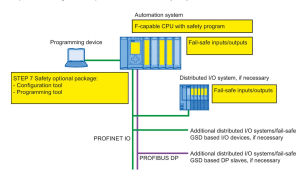
Many modern controllers integrate both standard automation and safety functionality into a single platform while maintaining strict logical separation between standard and safety programs.
Typical Safety Devices Connected to a Safety PLC
Safety PLCs communicate with a wide range of certified safety devices, including:
-
Emergency stop pushbuttons
-
Safety gate switches
-
Safety light curtains
-
Laser safety scanners
-
Safety relays
-
Two-hand control stations
-
Safe proximity sensors
-
Safety encoders
-
Safe drives
-
Safety contactors
Together, these components form a complete safety system capable of detecting hazardous conditions and responding appropriately.
Example: Emergency Stop Operation
Consider an automated conveyor transporting heavy materials.
During operation, an operator notices a hazardous situation and presses the emergency stop button.

The Safety PLC immediately:
-
Detects the emergency stop signal.
-
Confirms the integrity of the safety input.
-
Executes the programmed safety function.
-
Removes power from the conveyor drive.
-
Prevents restart until the emergency stop is reset and all safety conditions have been verified.
This sequence occurs within milliseconds, significantly reducing the risk of injury or equipment damage.
Key Advantages of Safety PLCs
Compared with traditional hardwired safety systems, Safety PLCs offer several important benefits.
Flexible Programming
Complex safety functions can be modified through software rather than extensive rewiring.
Simplified Expansion
Additional machines and safety devices can often be integrated with minimal hardware changes.
Advanced Diagnostics
Built-in diagnostics help maintenance personnel identify faults quickly, reducing downtime.
Reduced Wiring
Programmable safety often replaces large numbers of interconnected safety relays and hardwired circuits.
Improved Documentation
Safety logic is documented directly within the engineering project, making future maintenance easier.
Safety PLCs in Modern Manufacturing
Safety PLCs are widely used across industries where automated equipment presents potential hazards, including:
-
Automotive manufacturing
-
Food and beverage production
-
Pharmaceutical processing
-
Packaging systems
-
Material handling and logistics
-
Semiconductor manufacturing
-
Chemical processing
-
Water and wastewater treatment
-
Renewable energy facilities
Their ability to combine programmable flexibility with certified safety functions makes them an essential component of today's industrial control systems.
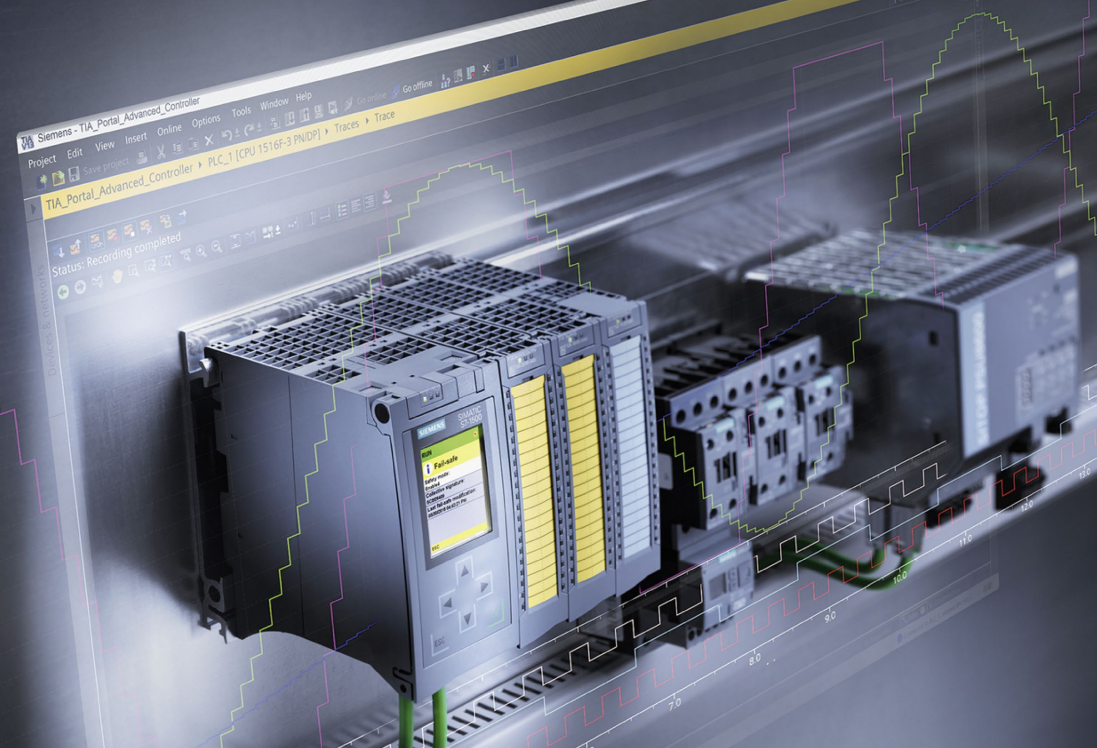
Safety PLCs in the SIMATIC S7-1200F and S7-1500F Family
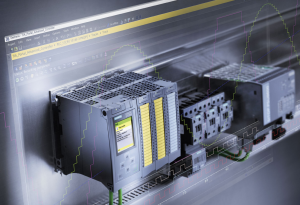
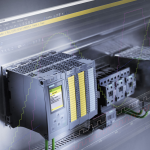
The Siemens SIMATIC S7-1200F and S7-1500F controllers integrate standard automation and fail-safe control within a single engineering environment. Safety-related logic is developed separately from the standard user program, allowing engineers to implement certified safety functions while continuing to manage conventional machine control in the same project.

This integrated approach simplifies engineering, improves diagnostics, and supports scalable machine designs without compromising functional safety.
Conclusion
A Safety PLC is much more than a standard controller with additional features. It is a purpose-built safety controller designed to monitor hazardous conditions, detect internal faults, and execute certified safety functions whenever people or equipment may be at risk.

By combining programmable flexibility with rigorous diagnostic capabilities, Safety PLCs enable manufacturers to build machines that are not only productive but also safe, reliable, and compliant with modern functional safety standards.

In the next article, we'll explore Fail-Safe CPUs (F-CPUs) and examine how they provide the hardware foundation for programmable safety in the SIMATIC S7-1200F and S7-1500F platforms.