Functional Safety for Safe Industrial Automation Systems
Industrial automation has transformed manufacturing by increasing productivity, improving quality, and reducing manual labor. However, as machines become faster and more autonomous, the consequences of failures also become more significant. A malfunctioning robot, an unexpected conveyor start, or an undetected sensor failure can result in serious injuries, equipment damage, or costly production downtime.

This is why functional safety has become a fundamental aspect of modern automation system design. Rather than simply stopping machines when something goes wrong, functional safety ensures that systems are designed to detect hazards, respond appropriately, and maintain an acceptable level of risk throughout their operation.

In this article, we'll explore what functional safety is, why it matters, and how it forms the foundation of safe industrial control systems.
What Is Functional Safety?
Functional safety is the part of a machine's overall safety that depends on control systems operating correctly in response to their inputs.

Unlike physical safeguards such as fences, guards, or warning signs, functional safety relies on electrical, electronic, and programmable control systems to reduce risks. These systems continuously monitor operating conditions and automatically place machinery into a safe state whenever hazardous situations or system faults are detected.

For example, if an operator opens a safety gate while a robot is moving, the control system should immediately detect the event and safely stop hazardous motion before someone can enter the danger zone.

The emphasis is not simply on stopping the machine. It is on ensuring that the safety function performs correctly whenever it is needed.
Why Functional Safety Matters
Industrial facilities contain numerous hazards:
-
High-speed rotating machinery
-
Robotic work cells
-
Automated conveyors
-
Hydraulic and pneumatic systems
-
High-voltage electrical equipment
-
Presses and cutting machines
Even with experienced operators and well-trained maintenance personnel, component failures, wiring faults, software defects, or unexpected operating conditions can occur.

Functional safety reduces these risks by ensuring that safety-related control systems are designed with fault detection, diagnostics, and predictable responses. This helps protect:
-
Personnel working around machinery
-
Equipment and production assets
-
Product quality
-
Plant availability
-
Regulatory compliance
Functional Safety vs. General Machine Safety
Machine safety involves every measure taken to reduce hazards, including:
-
Mechanical guards
-
Safety fences
-
Lockout/tagout procedures
-
Warning labels
-
Safe operating procedures
-
Operator training
Functional safety is one part of this broader strategy. It specifically addresses the behavior of the machine's control system when safety-related events occur.

For example:
-
A guard fence prevents accidental access.
-
A safety interlock detects when the guard is opened.
-
The safety controller processes that signal.
-
Hazardous motion is safely removed.
Together, these elements create a comprehensive safety system.
How Functional Safety Works
A functional safety system continuously performs a cycle of monitoring and response.

First, it gathers information from safety devices such as emergency stop buttons, safety gates, light curtains, or safety scanners.

Next, the safety controller evaluates whether all operating conditions remain safe.

If an unsafe condition or internal fault is detected, the controller immediately commands the machine to enter a predefined safe state. Depending on the application, this may involve:
-
Removing motor power
-
Stopping robot motion
-
Disabling hazardous outputs
-
Activating brakes
-
Preventing automatic restart
Throughout operation, the controller also performs internal diagnostics to verify that the safety system itself is functioning correctly.
Common Components of a Functional Safety System
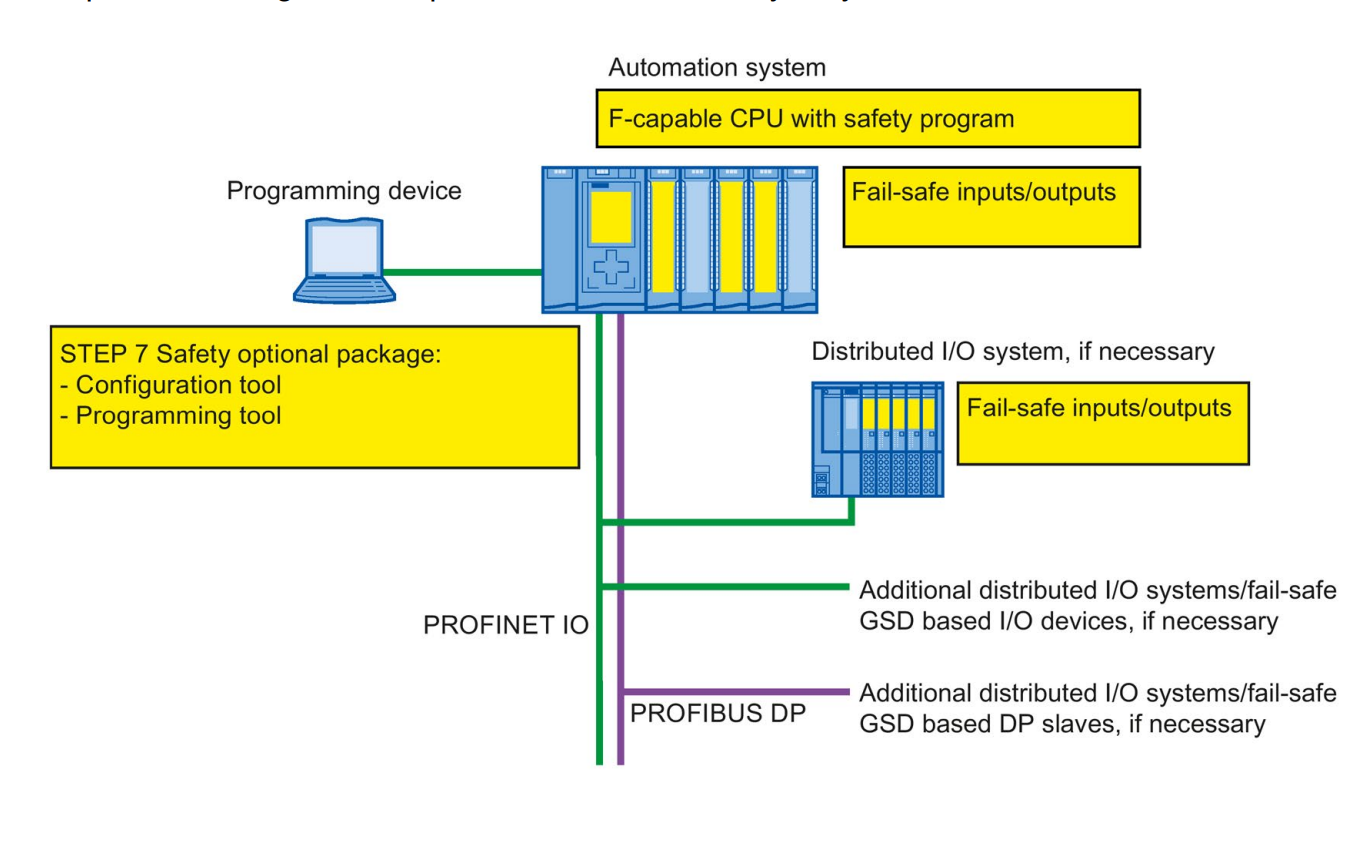
A typical industrial safety system includes several integrated components:
Safety Sensors
These detect hazardous conditions.
Examples include:
-
Emergency stop buttons
-
Safety light curtains
-
Safety laser scanners
-
Safety door switches
-
Two-hand control devices
-
Safety pressure mats
Safety Controller
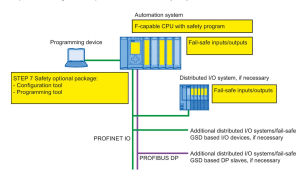
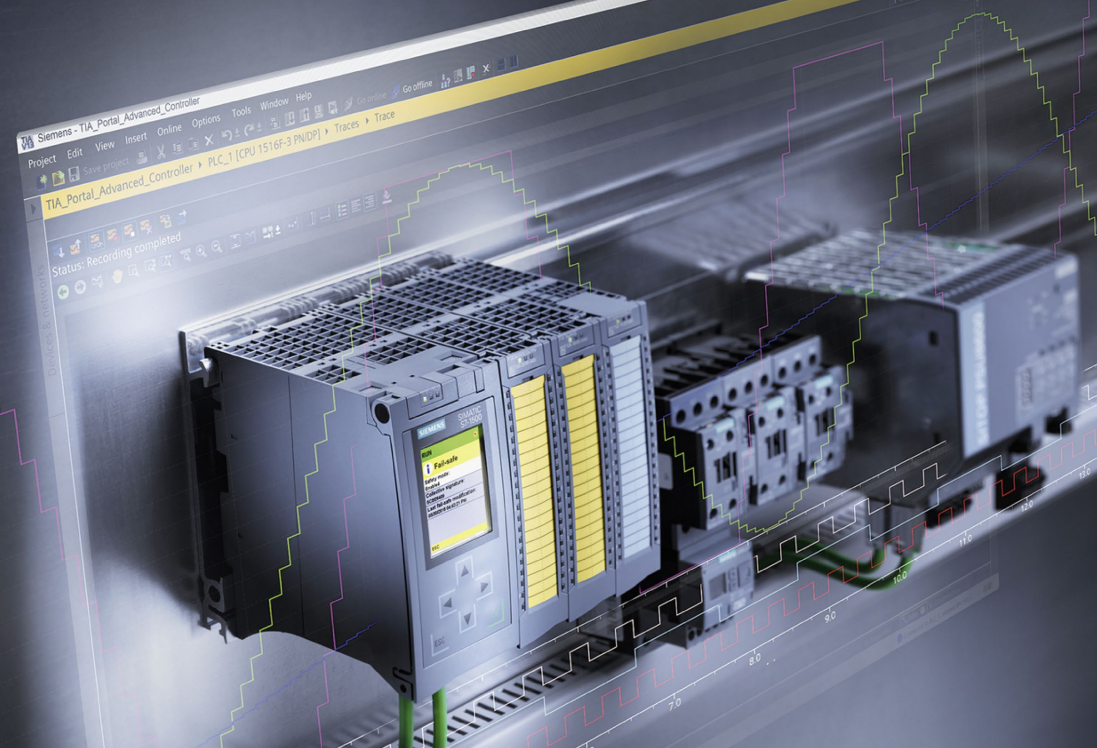
The safety controller executes certified safety logic and determines whether the machine may continue operating safely.
Modern systems often use programmable Safety PLCs to perform this function.
Safety Outputs
When necessary, the controller activates safety outputs that:
-
Remove electrical power
-
Open safety contactors
-
Stop motors
-
Disable drives
-
Prevent hazardous movement
Detecting Faults Is Just as Important as Detecting Hazards
One important principle of functional safety is that the control system must detect not only dangerous operating conditions but also failures within the safety system itself.

Examples include:
-
Broken sensor wiring
-
Short circuits
-
Communication failures
-
Processor faults
-
Memory corruption
-
I/O failures
If these faults cannot be safely tolerated, the system transitions to a safe state rather than continuing normal operation.
This approach helps ensure that hidden failures do not compromise operator safety.
International Functional Safety Standards
To ensure consistent levels of protection, industrial safety systems are designed according to internationally recognized standards.

Among the most widely used are:
-
IEC 61508 – Functional Safety of Electrical/Electronic/Programmable Electronic Safety-Related Systems
-
IEC 62061 – Safety of Machinery – Functional Safety of Safety-Related Control Systems
-
ISO 13849 – Safety-Related Parts of Control Systems
These standards define methods for risk assessment, safety integrity, hardware architecture, software development, validation, and maintenance.
Functional Safety in Modern Manufacturing
Today's manufacturing environments increasingly rely on flexible automation, collaborative robotics, and connected industrial systems.
As production systems become more sophisticated, programmable safety allows engineers to:
-
Simplify machine design
-
Reduce complex safety wiring
-
Improve diagnostics
-
Expand systems more easily
-
Maintain compliance with international standards
-
Increase machine availability without compromising safety
This is one reason programmable safety controllers have largely replaced traditional hardwired relay-based safety systems in many industrial applications.
Looking Ahead
Functional safety is far more than an emergency stop button or a collection of safety devices. It is a systematic engineering approach that ensures industrial control systems behave predictably whenever hazardous situations or equipment failures occur.

Understanding these principles is essential for anyone involved in machine design, controls engineering, maintenance, or industrial automation.

In the next article in this series, we'll explore the controller at the heart of many modern safety systems by answering an important question:
What Is a Safety PLC, and How Does It Protect People and Machinery?
Source: Siemens Manual